I’ve been wanting to write this post all semester, but it’s taken me nearly three months to get my feet under me in this new homeschool rhythm. Now I think I’m ready.
For the majority of our 10-year journey, we’ve followed a classical education philosophy. The reasons we chose it and the reasons we stopped are a whole separate blog post. Today I’d rather talk about what we’re doing now.
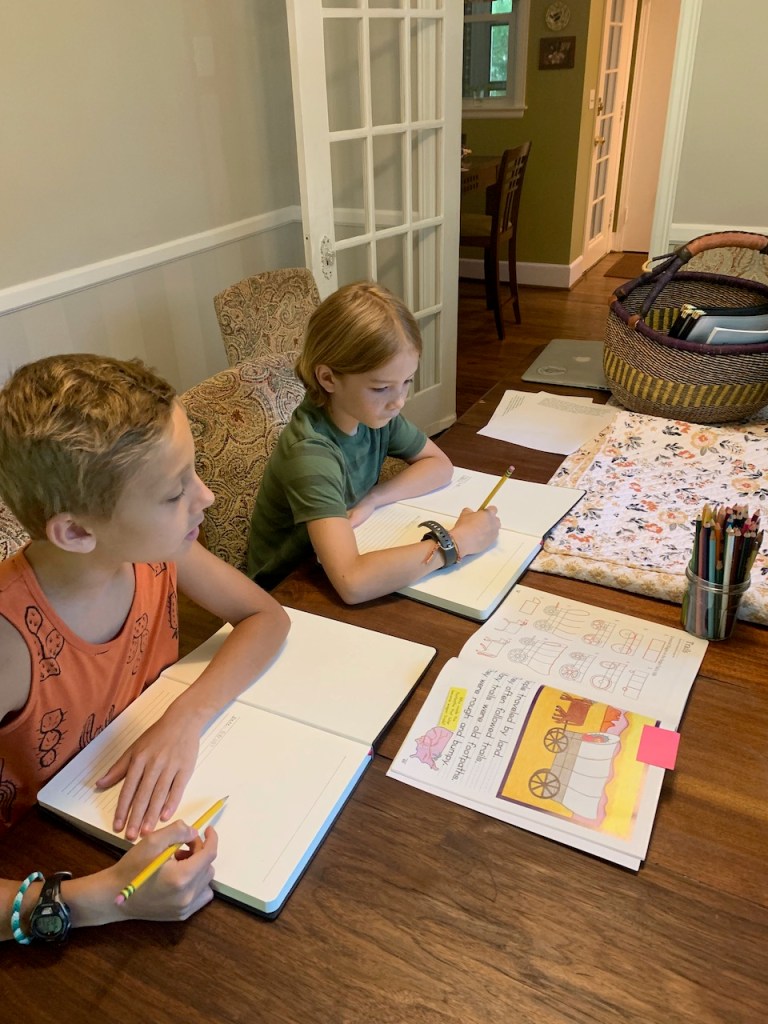
This is the way I described our changes to Gabe and Noah at the start of the school year: “We’re not going to do any worksheets and we’re not taking Latin.” Now, I do want to say that Latin is often part of Charlotte Mason homeschooling, but as the kids and I have been learning it in some form for 10 years, we needed a break. Three of my kids want a break forever; Gabe alone enjoyed it and is deciding whether he’ll return one day.
I decided that the easiest way to tell you about our new homeschool philosophy it is to describe our days. So here goes.
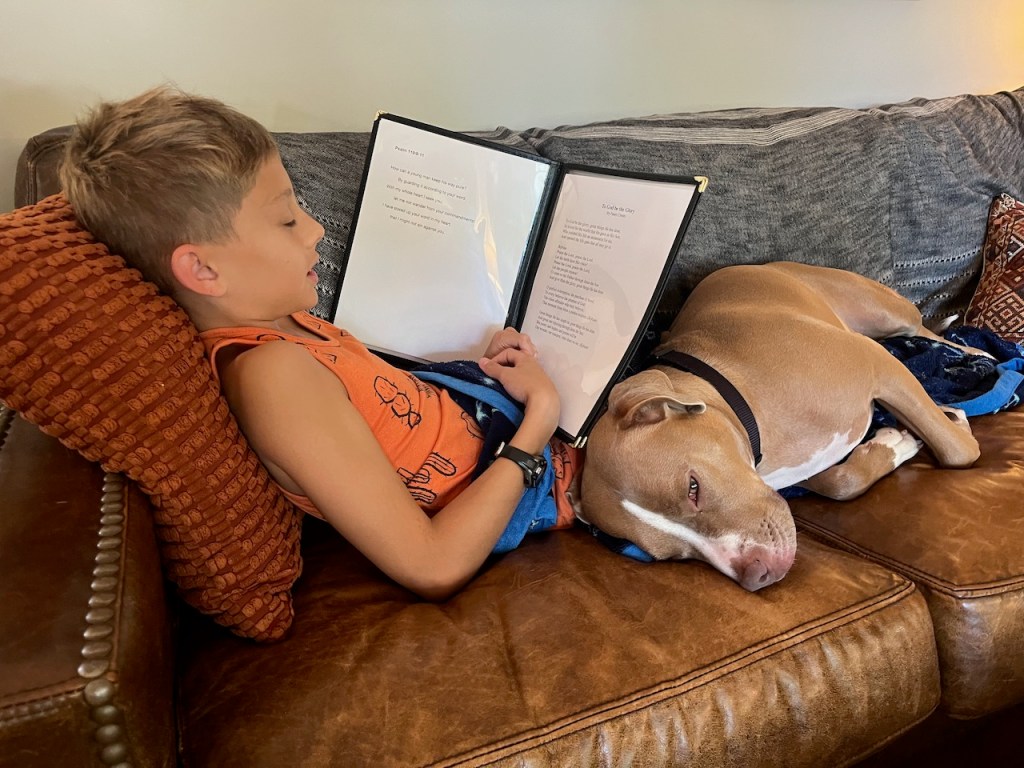
I try to get out of bed by 6:30. David makes me coffee and I curl up on the couch to read the Bible and cuddle with my dog.
The younger boys are allowed to come out of their room at 7:00 but beyond a hug and greeting they have to do something quiet so I can read my Bible. The big kids emerge by 7:30 and are doing their school work by 8:00.
Everyone typically gets their own breakfast (I make eggs and turkey sausage Tuesdays/Thursdays for whoever wants it because those are the big kids’ co-op days). Gabe and Noah have their list of morning steps and chores, then are free if they want to play until 9:00 (or they can start their independent schoolwork). This is a great time for me to help Amie with her homework, typically it’s pre-algebra.
At 9:00, Gabe, Noah and I gather in the living room for what we call Morning Meeting (you may have also heard it called Morning Time or Circle Time). We do Scripture memory, sing our hymn of the month, and work on our current poem and review past memory work. I ordered plastic menu holders from Amazon and each of us has our own to flip through for our current memory work.
We’re spending this year studying the life and poetry of Carl Sandburg. Fun fact: in his later years, Sandburg owned a small farm in Flat Rock, NC, which you can visit today. We also cycle through a brief weekly artist and composer study.
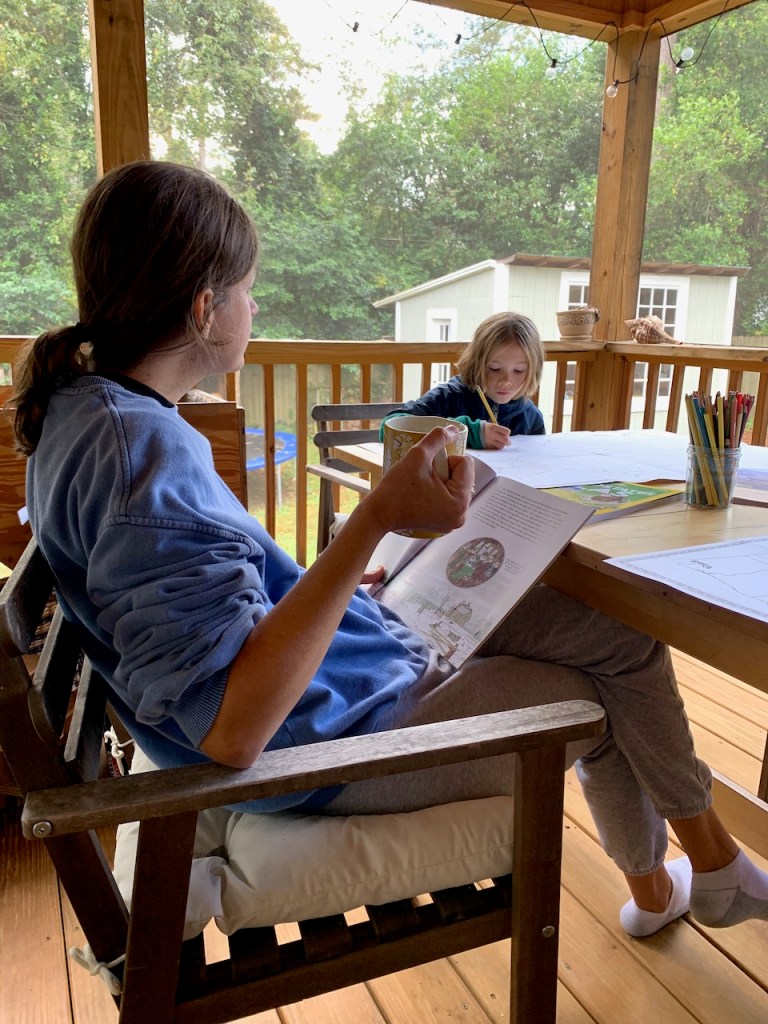
Next I read 20 minutes of our literature selection. This semester it was Peter Pan, by J.M. Barrie.
Then we have our history lesson for the day (on Fridays we sub in geography). This year we’re studying modern American & World history (we began with the Oregon Trail). We do all of this through reading what Charlotte Mason called “living books,” which are books written by one person who was passionate about their subject, rather than reading a textbook.
After the history read-aloud, I choose one of the boys to begin “narrating,” or telling back, what I read. Ms. Mason believed that this was the primary way for a person to digest living ideas and develop a relationship with them.
This has been the biggest change for the boys and I — to move from worksheets and papers about what we’re learning to simply telling it back. Ideally, a middle-schooler like Gabe would also be doing some form of written narration based on what he learned each day, but since this is our first year with narration, I’ve given him the semester to do it orally. Next semester we’ll begin adding a few written narrations.
Many people don’t understand narration — it feels too simple. For many years I was drawn to Charlotte Mason’s educational philosophy but also didn’t understand narration or see why it was necessary. Now it makes sense to me because of all my classical education studies. The art of rhetoric is the art of communicating what one has learned to others; this is the only way to know if a person has truly learned the material. And that’s essentially what narration is.
The point is that the brain has to work harder for this kind of knowledge than choosing a multiple choice answer on a quiz, or hearing a leading question from a teacher/parent about the material. In both of the other instances, the teacher is doing most of the work; with narration, the student must pay careful attention, recall and organize the material, and communicate it.
If you actually try to do narration yourself: read a few paragraphs of any book, then say or write it back in your own words, it’s incredibly hard! Sometimes I’ll write a narration of the Scripture passage I read in the morning, just to practice.
After three months of near-daily narration, I’m seeing growth in Gabe and Noah, and I’m so pleased with that growth, particularly in the area of retention. One of my boys especially struggles with Executive Function skills– organizing and verbalizing his thoughts. In August, he could hardly find the basic words to tell back our history reading. There were lots of “so” and “um” and incomplete sentences. Today, he can tell us a couple of full paragraphs at least, and the biggest change I’ve noticed is the vast improvement in his vocabulary skills. He repeats words I read aloud and uses sophisticated vocabulary appropriately. I’m excited to see what the rest of the year holds for him.
In lieu of workbooks, the boys have black sketchbook-style notebooks that they write or sketch and label in daily. We also use them for handwriting, spelling dictation (I’ll get to that in a minute), narration, and notebooking of history or science.
Notebooking is one of my favorite things we do. We simply pick something from one our subjects to sketch. Typically I choose what we’ll draw, and as often as I’m able, I pull out my own Hobby Lobby sketchbook and draw right alongside them. We use encyclopedias or nature books from around the house, as picture printed off the internet or Art for Kids Hub on Youtube. I don’t always make the boys color their work, but often we do. Many Charlotte Mason homeschoolers use watercolor paints with their nature sketches; we use colored pencils. Sometimes the boys complain but I’m always so impressed by the careful work they do and all of our sketching skills have improved.

This is another way to interact with the ideas we’ve been exposed to and allow them to become part of ourselves.
This entire part of our morning takes about an hour and a half. Then I set Gabe and Noah free for a snack and independent work (and sometimes to shoot the basketball or jump on the trampoline if they need to move their bodies).
They get to work on their independent work, which consists of a math lesson (instructional video and okay, yes, a worksheet), independent reading, personal Bible study, computer work (typing for Noah and a coding lesson for Gabe), and some work on their spelling sentence. If they’re ready, I dictate their spelling sentence(s) and they write it with punctuation.
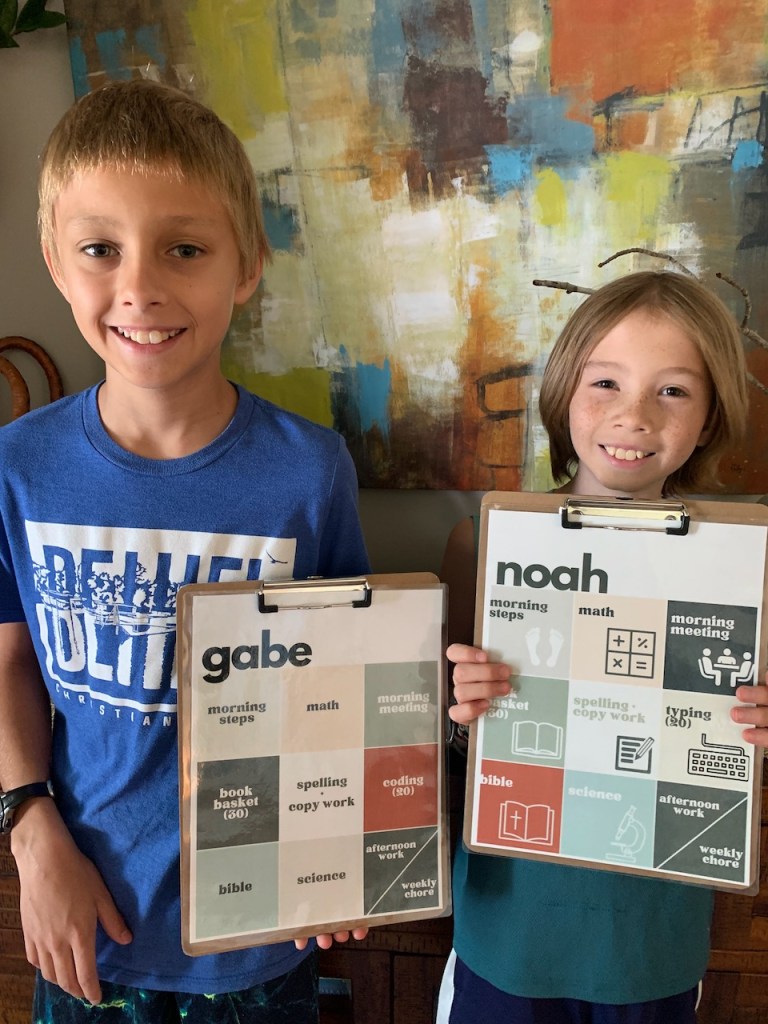
Our friend Alyssa helped me design to-do lists for the boys based on an idea from Read-Aloud Revival. I cover the squares with Post-It notes, and the boys remove one when they work on a subject. This has worked so much better than a long school list for them.
Typically we don’t get science done before lunch, so we circle back to that after “room time” in the afternoon. Many of you know I originally got the idea of an afternoon rest time from Susan Wise Bauer, who said she implemented it with her four homeschooled kids from infancy through high school. I began incorporating it as soon as my kids gave up their afternoon naps, so we’ve always done it. In our house it’s still called play time, which is funny to us but we can’t seem to stop. The rule is you’re either in your room or playing outside from 1-3pm. Mom takes a nap with the dog and reads with a cup of Yorkshire Gold tea.
The big kids often have homework they’ll do in the dining room or living room, but as often as possible they like to give themselves a short break too. This is when they usually take their run.
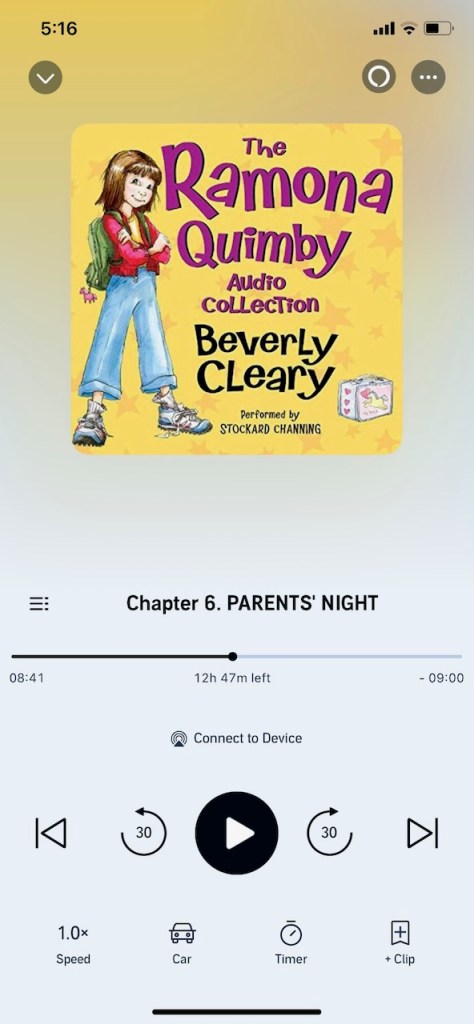
Currently, the boys are into listening to audiobooks during playtime. This semester they’ve marched through the entire Penderwicks, Ramona, and Henry Huggins series, as well as the Melendys and many of Edith Nesbits novels. All of these books are re-listens. Gabe would never choose to listen to audiobooks on his own, but Noah typically ropes him into it, and he ends up enjoying them.
At 3:00 the boys take their run (David plans their weekly runs and writes them on the fridge whiteboard). This is their P.E.! On nights they have basketball practice (or soccer fall and spring) they don’t have to run. Then they settle in with a snack (Halloween candy right now. Still.) and I read our science book and we do oral narration. We nature journal at least twice a week, which involves noting trees, flowers, birds, or insects from our neighborhood, drawing and labeling them.
The boys finish up any independent work and they have an afternoon chore each day of the week.
Then they’re free to play. Gabe has a phone attached to an iCloud email address, with which he can text his cousins and play Chess.com with his uncle for a few minutes.
I try to help the big kids with any homework questions before I get started on dinner. I was going to the gym twice a week but that is on hold for now. I really need to figure out my workout routine.
These are our school days right now. I’m glad I wrote this out, because it struck me that I’ll want to remember it (here’s hoping this blog doesn’t crash like my last one did).
It sounds idyllic, but what you don’t see are the many arguments, poor attitudes (theirs and mine), interruptions, and times I check my phone too much. There are also days we take school on the road for doctor’s appointments or errands but we try to make it fun. We always have a “together” audiobook for the van. Right now it’s Refugee, by Alan Gratz.
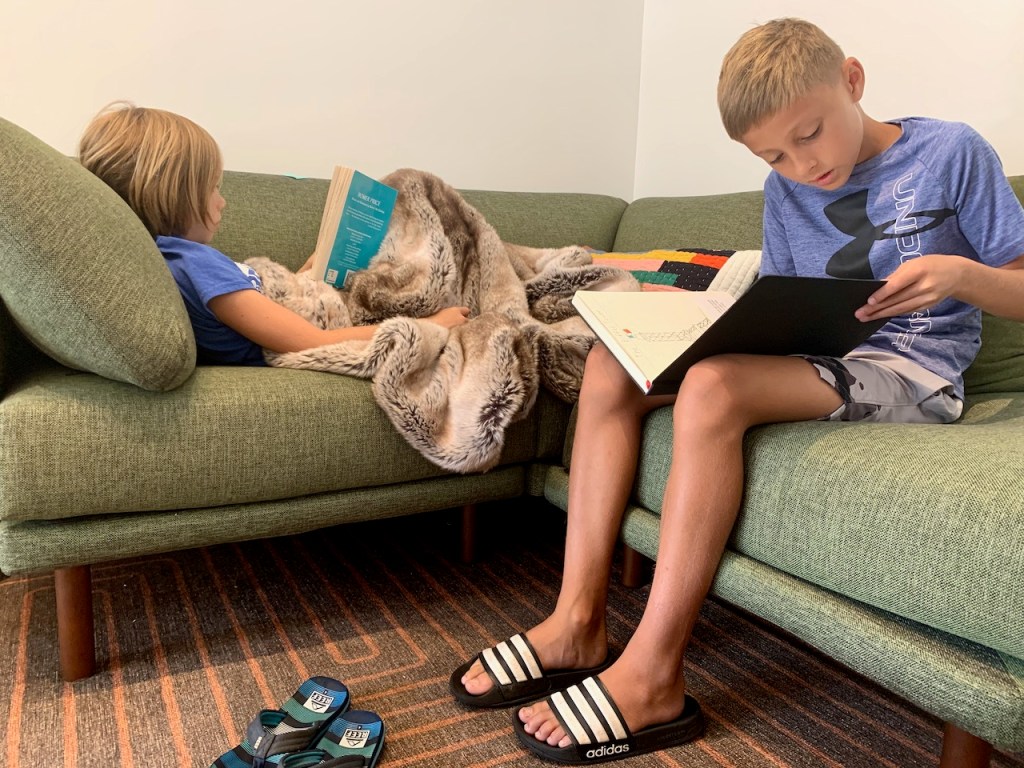
It seems like every day there is something we need to work through or something we don’t quite get done. But I’m coming to accept this as part of our homeschool too. It’s real life. It’s usually messy but it’s beautiful too.



Leave a Reply